
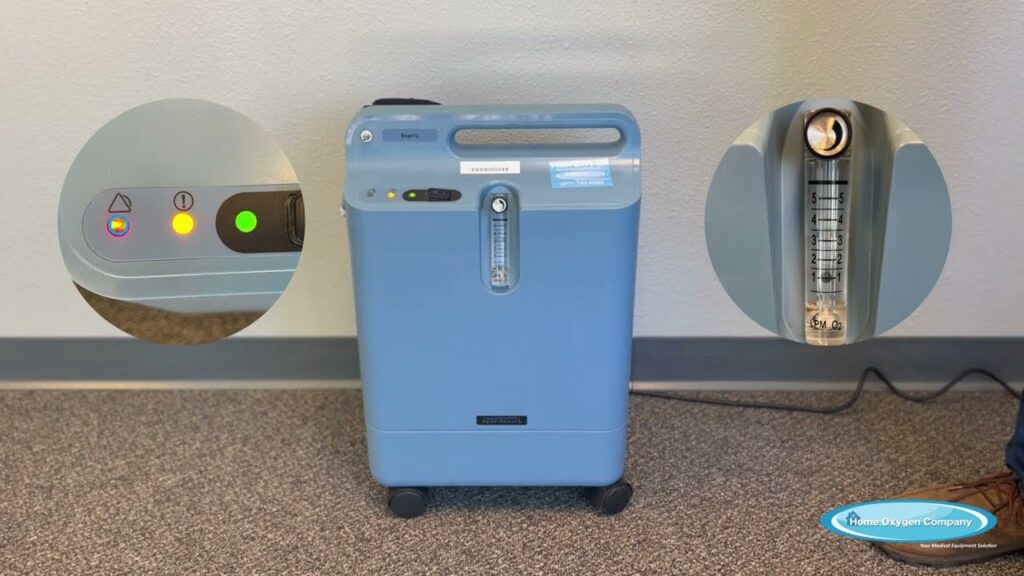
What follows breaks down why many users and caregivers keep choosing it, and what to check before they do.
What is the EverFlo concentrator, and what does it do?
The EverFlo Concentrator is a stationary oxygen concentrator designed for home use. It draws in room air, filters out nitrogen, concentrates the oxygen, and delivers it through tubing to a nasal cannula or other prescribed interface.
It’s typically used by individuals who require supplemental oxygen for chronic respiratory conditions such as COPD or other long-term lung diseases. The prescribed flow rate and daily duration of use should always be determined and monitored by a qualified clinician.
Why do people prefer it for everyday home use?
They often prefer it because it’s straightforward. The controls are simple, the setup is familiar to most home-care providers, and it’s designed to run as a dependable “background” device rather than something that demands constant attention.
For many households, that simplicity matters as much as performance. When a device is easy to understand, it’s easier to use consistently, which is usually the whole point of prescribed oxygen.
How does its design make it feel less “medical” at home?
Its styling and footprint tend to look more like a small appliance than a bulky clinical unit. That can make it easier to place in a living space without rearranging everything around it.
A concentrator still needs proper clearance for airflow and safe routing of tubing, but the EverFlo’s form factor often makes those practical steps less disruptive.
Why is sound level such a big reason it’s chosen?
Noise becomes a daily-quality-of-life issue in home oxygen therapy. Many people use oxygen while watching TV, talking, or sleeping, so a loud device can become exhausting.
The EverFlo is widely associated with relatively quiet operation for a stationary concentrator. That can help users stick with therapy during the hours they most need it, including at night.
What makes it easier for caregivers and family members?
Caregivers usually want two things: fewer steps and fewer surprises. A concentrator that is simple to check, easy to start, and consistent in operation reduces the chance of missed therapy or accidental mis-adjustment.
They also benefit when routine tasks feel obvious, such as verifying the flow setting, checking filters, and confirming the unit is running normally. The EverFlo’s user-friendly layout supports that kind of quick daily oversight.
How does maintenance and upkeep affect its popularity?
Most people don’t want “high-maintenance” medical equipment at home. The more manageable the routine care, the more likely a device is to remain in good working order.
With any concentrator, maintenance typically includes keeping the air intake clear, cleaning or replacing filters as directed, and following the service schedule recommended by the provider or manufacturer. When that routine is simple, it’s easier for households to keep up with it.
Other Resources : Services under Support at Home
What should they check before choosing an EverFlo?
They should start with clinical fit. The prescribed oxygen flow rate and therapy plan must match what the concentrator can deliver, and a clinician or oxygen supplier should confirm that match.
They should also check practical fit: where it will sit, whether airflow clearance is possible, how long the tubing run will be, and how it will affect sleeping arrangements. If power outages are common, they should ask about a backup plan, since stationary concentrators rely on electricity.
Who is it not ideal for?
It’s not ideal for users who need a highly portable solution for long periods away from home. A stationary concentrator is usually meant to stay put, with portability handled by separate equipment if needed.
It may also be a poor fit if a person’s prescribed oxygen requirements exceed what a given home concentrator model supports. In those cases, the care team and supplier typically recommend a different setup.

What’s the practical takeaway for home oxygen shoppers?
The EverFlo is popular because it aligns with what most households actually want from home oxygen: steady performance, lower day-to-day hassle, and a device that blends into routine life. If the prescription matches and the home setup supports safe placement and backup planning, it often becomes a dependable long-term option.
They should still treat the final decision as a clinical one. The most “popular” concentrator is only the right one when it fits the prescription, the space, and the daily reality of the person using it.
More to Read : Oxygen Ventilator for Home: When Is It Prescribed?
FAQs (Frequently Asked Questions)
What is the EverFlo oxygen concentrator and how does it work for home use?
The EverFlo is a stationary oxygen concentrator designed specifically for home use. It draws in room air, filters and concentrates oxygen, then delivers it through tubing to a nasal cannula or another prescribed interface, providing supplemental oxygen as prescribed by a clinician.
Why is the EverFlo concentrator preferred for everyday home oxygen therapy?
Many users prefer the EverFlo because of its straightforward operation, simple controls, and dependable performance. It is designed to function as a reliable background device that fits seamlessly into home routines without requiring constant attention, making consistent use easier.
How does the design of the EverFlo make it less intimidating and more practical in a home setting?
The EverFlo features styling and a compact footprint that resemble small household appliances rather than bulky medical equipment. This allows it to blend into living spaces easily without major rearrangements, while still ensuring proper airflow clearance and safe tubing placement.
Why is the quiet operation of the EverFlo important for users at home?
Noise levels significantly impact daily quality of life during home oxygen therapy. The EverFlo is known for its relatively quiet operation among stationary concentrators, helping users maintain therapy comfortably during activities like watching TV or sleeping without disruptive noise.
How does the EverFlo support caregivers and family members in managing home oxygen therapy?
Caregivers benefit from the EverFlo’s simple setup, easy-to-check controls, and consistent operation. Its user-friendly layout makes routine tasks like verifying flow settings, checking filters, and confirming normal function straightforward, reducing errors and missed therapy.
What should potential users check before choosing an EverFlo concentrator for home oxygen therapy?
Before selecting an EverFlo, users should ensure their prescribed oxygen flow rate matches what the device can deliver by consulting their clinician or supplier. They should also consider practical aspects like placement space, airflow clearance, tubing length, sleeping arrangements, and have a backup plan for power outages since it relies on electricity.